Personalized Gifts: What Real Customer Data Reveals in 2026
What real customer data reveals about personalized gifts: the most loved illustration style, print vs digital, and who they are really for.

Personalized gifts are products customized with a person's name, photo, story, or relationship so the final item is unique to one recipient. New data shows buyers no longer treat them as novelties. They choose printed keepsakes over digital files, pick a clear favorite art style, and most often create them for a romantic partner.
This report combines global market figures with first-hand Love Tales data to show what people actually buy and why it matters for your next gift.
Key Takeaways
- The global personalized gifts market sits near 30 to 34 billion US dollars in the mid-2020s and is projected to reach 53 to 62 billion by 2035, growing 5.4 to 6.7 percent a year (Business Research Insights, 2026; Market Research Future, 2024).
- More than 70 percent of consumers say they prefer personalized products over standard ones (Business Research Insights, 2026).
- In Love Tales data, roughly 2 in 3 buyers choose a printed book over a digital version, and hardcover is the single most popular format.
- A 3D cartoon art style is the runaway favorite, chosen for about 56 percent of personalized books, more than the next three styles combined.
- About 54 percent of personalized love books are made by dating couples, ahead of married and engaged couples.
- Women create these books slightly more often than men, and recipients are split almost evenly by gender with a small lean toward women.
What Counts as a Personalized Gift?
A personalized gift is any product made one-of-a-kind for a specific person through customization. That includes engraved jewelry, photo books, custom apparel, monogrammed home decor, and personalized love books that turn a couple's real story into illustrated chapters. The defining trait is relevance: the gift references the recipient directly, so it cannot be re-gifted or mass-produced. This is what separates personalized gifts from generic presents and explains why they carry more emotional weight.
The Personalized Gifts Market in 2026
The personalized gifts market is large and growing steadily. Two independent forecasts put it between 30 billion and 34 billion US dollars in the mid-2020s, climbing to 53 billion to 62 billion by 2035 at a compound annual growth rate of 5.4 to 6.7 percent (Market Research Future, 2024; Business Research Insights, 2026). Growth is driven by e-commerce, social sharing, and a clear consumer preference for meaningful items.
Three signals matter most for gift-givers:
- Demand is mainstream, not niche. More than 70 percent of consumers prefer personalized products over standard ones (Business Research Insights, 2026), and over 65 percent prefer personalized gift items specifically.
- North America leads. The region holds the largest share of the market at 34 to 38 percent across both forecasts, making it the center of gravity for couple-focused products.
- Buying has moved online. Online channels account for more than 55 percent of personalized gift purchases, and personal celebrations are the fastest growing use case (Market Research Future, 2024).
The Four Illustration Styles, Explained
Personalized books come in four illustration styles, and buyers do not split evenly across them. One option wins by a wide margin. Here is what each style looks like and how often couples choose it, based on Love Tales data.
3D Cartoon: about 56 percent of books
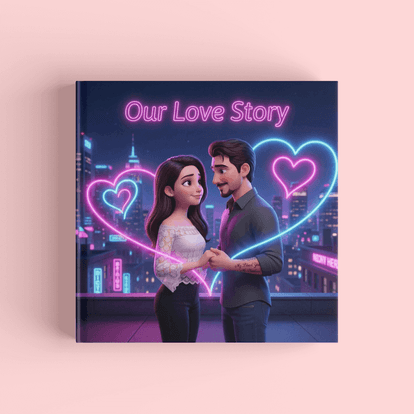
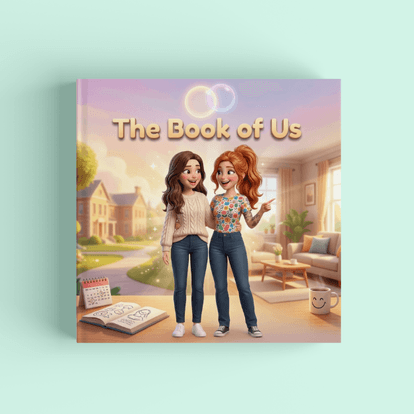
A Pixar-inspired 3D style that is cinematic, emotionally expressive, and lit with vibrant, soft lighting. It uses smooth textures, round facial geometry, and warm, exaggerated expressions. It is the runaway favorite, chosen more often than the other three styles combined, because it reads as both playful and premium on a keepsake meant to be displayed and re-read.
Watercolor: about 20 percent of books
A soft, romantic, hand-painted look built on pastel hues, gentle brush textures, and diffused light. Watercolor is the most popular alternative to 3D, picked by couples who want a classic, dreamy feel rather than a bright animated one.
2D Cartoon: about 16 percent of books
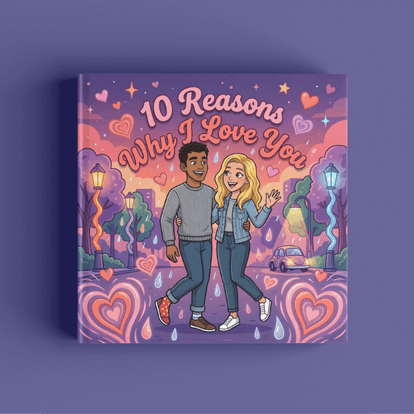
Bold, colorful 2D line art with clean outlines, simplified features, and a cheerful, pop-style energy. It suits couples who like a fun, graphic, comic-book mood for their story.
Manga: about 9 percent of books
Japanese black-and-white comic art that is dynamic and emotionally intense, with sharp contrasts, strong linework, and expressive eyes. It is the most niche choice, loved by couples who already follow manga and anime.
The lesson for personalized love gifts is simple. A polished, flattering style beats stylized or niche looks for most couples. If you are choosing art for a custom gift, a cinematic 3D illustration is the safe, high-satisfaction default, while manga and other graphic styles are best reserved for recipients who already love them.
Print Still Wins: Physical Beats Digital
Buyers overwhelmingly want something they can hold. Across Love Tales orders, roughly 63 percent choose a printed book and hardcover is the most popular single format, ahead of digital downloads and softcover. Digital still has a place for speed and price, but it is the minority choice.
This matches the broader shift toward experiential and keepsake gifting. A printed personalized gift sits on a shelf, gets opened on an anniversary, and becomes part of a couple's history in a way a file on a phone does not.
Who Personalized Love Books Are Really For
The most common reason to make a personalized love book is to celebrate a romantic partner. In Love Tales data, about 80 percent of the people featured in these books are the buyer's partner, with the buyer appearing in a smaller share of stories. The gender picture is more balanced than many assume. The partners celebrated are split almost evenly, at roughly 51 percent women and 48 percent men, with a small lean toward women being the recipient. A personalized love gift is not a one-direction gesture.

Who Makes Personalized Gifts: Men or Women?
Women create personalized love books slightly more often than men, though the gap is smaller than the stereotype suggests. Using the book creator's own profile as a proxy for the gift-giver, about 55 percent of makers are women and 44 percent are men. The takeaway: personalized gifting is close to a shared habit across genders, not a behavior dominated by one. Marketing that speaks only to women misses nearly half the audience.
A note on method: customer accounts do not store the buyer's gender, so this figure is based on the self-character people add to their own book. It is a strong proxy, not a billing-level fact.
Relationship Status: Dating Couples Lead
Personalized love gifts are not just for marriages and milestone anniversaries. About 54 percent of personalized love books are made by dating couples, ahead of married couples at 28 percent and engaged couples at 13 percent. Put together, two in three are made by unmarried couples, dating or engaged. The biggest group is couples marking everyday love and early relationship milestones, not only spouses celebrating decades together.
Most Popular Format and Tone
Among personalized book types, the classic illustrated storybook dominates, chosen for about 88 percent of orders, with dedicated why I love you books next. Tone is even more consistent: nearly 99 percent of buyers choose a romantic tone over playful or nostalgic alternatives. People come to personalized love gifts to say something heartfelt and direct.
Where Demand for Personalized Gifts Is Concentrated
Demand is concentrated in North America and Western Europe. North America holds the largest share of the personalized gifts market at 34 to 38 percent across both forecasts, making it the center of gravity for personalized anniversary gifts and couple-focused products (Market Research Future, 2024; Business Research Insights, 2026). Europe follows as the next-largest region, with the United Kingdom and France among the strongest individual markets. For brands, the practical signal is to lead with North American audiences while keeping Western European demand well served.
Industry Trends vs. What Buyers Actually Do
The pattern is clear. Personalized gifts are mainstream and growing, but the people buying them want a physical, romantic, beautifully illustrated keepsake far more than a quick digital file.
| Signal | Industry forecast | Love Tales buyer behavior |
|---|---|---|
| Format | Online and digital channels growing fast | About 2 in 3 still choose a printed book |
| Top product | Personalized books a leading category | Classic storybook chosen for about 88 percent |
| Core occasion | Personal celebrations fastest growing | Dating couples are the largest group |
| Buyer profile | Millennials are the largest demographic | Near even split, women slightly ahead |
| Preference strength | Over 70 percent prefer personalized items | One art style chosen by about 56 percent |
How to Choose a Personalized Gift That Lands
- Default to print. Choose a hardcover or printed keepsake for any occasion that matters. It is what most buyers pick and what recipients keep.
- Pick a flattering art style. A polished 3D illustration satisfies the widest audience. Reserve niche styles like manga for recipients who already love them.
- Make it about the relationship. Center the gift on your shared story. Partner-focused gifts are the most common and the most loved.
- Do not wait for a wedding. Dating and engaged couples are the largest audience, so an anniversary, a first-date date, or just because all qualify.
Common Mistakes to Avoid
- Choosing digital to save time. It is the minority choice for a reason. A printed gift carries far more weight on the day it is opened.
- Overthinking the art style. Buyers converge on one polished look. Picking an obscure style to seem original often lowers satisfaction.
- Assuming personalized gifts are only for women. Recipients and givers are close to evenly split by gender.
- Waiting for a major milestone. The largest group of buyers are dating couples. Everyday moments are the norm.
- Generic personalization. A name on a mug is not the same as a gift built around a real story. Depth of personalization is what makes the gift unre-giftable.
The Bottom Line
The data points one direction. People want a printed, romantic, beautifully illustrated gift built around their own relationship, whether they are dating, engaged, or married. For personalized anniversary gifts and beyond, choose the format and story that the most satisfied buyers already pick, then create your personalized love book.

Frequently Asked Questions
What are the most popular personalized gifts right now?
Are personalized gifts more popular as physical or digital?
Who buys personalized gifts more, men or women?
Are personalized gifts only for married couples?
How big is the personalized gifts market?



Still have questions?
Can't find the answer you're looking for? Get in touch with our support team.
We've helped 2,356+ couples make someone's day
More about Guides about Couples and personalized gifts
Every love story deserves its own book
Discover our collection of personalized, illustrated books that turn your relationship into a premium keepsake — AI writes, you keep the memories.